Madrones and native oaks around Gold Hill need little summer water, a root zone left undisturbed, and light pruning of dead wood. Most of the damage they suffer comes from watering near the trunk, soil piled or packed over roots, and bark wounds. For a tree care visit from a CCB-licensed tree service, call (541) 502-8114.
Tree Service Gold Hill is a free referral service and does no tree work itself. The company you are connected with can be asked to look over your trees, say what it sees and write up an estimate for any work it suggests. This guide gathers what Oregon State University Extension, the Oregon Department of Forestry and the USDA Forest Service say about caring for the three native hillside trees most Gold Hill owners have. The home page explains how the referral works.
The three native trees on most Gold Hill lots
Three broadleaf natives are common on the dry slopes around Gold Hill, and each has its own habits. Knowing which one you have is the first step in caring for it.
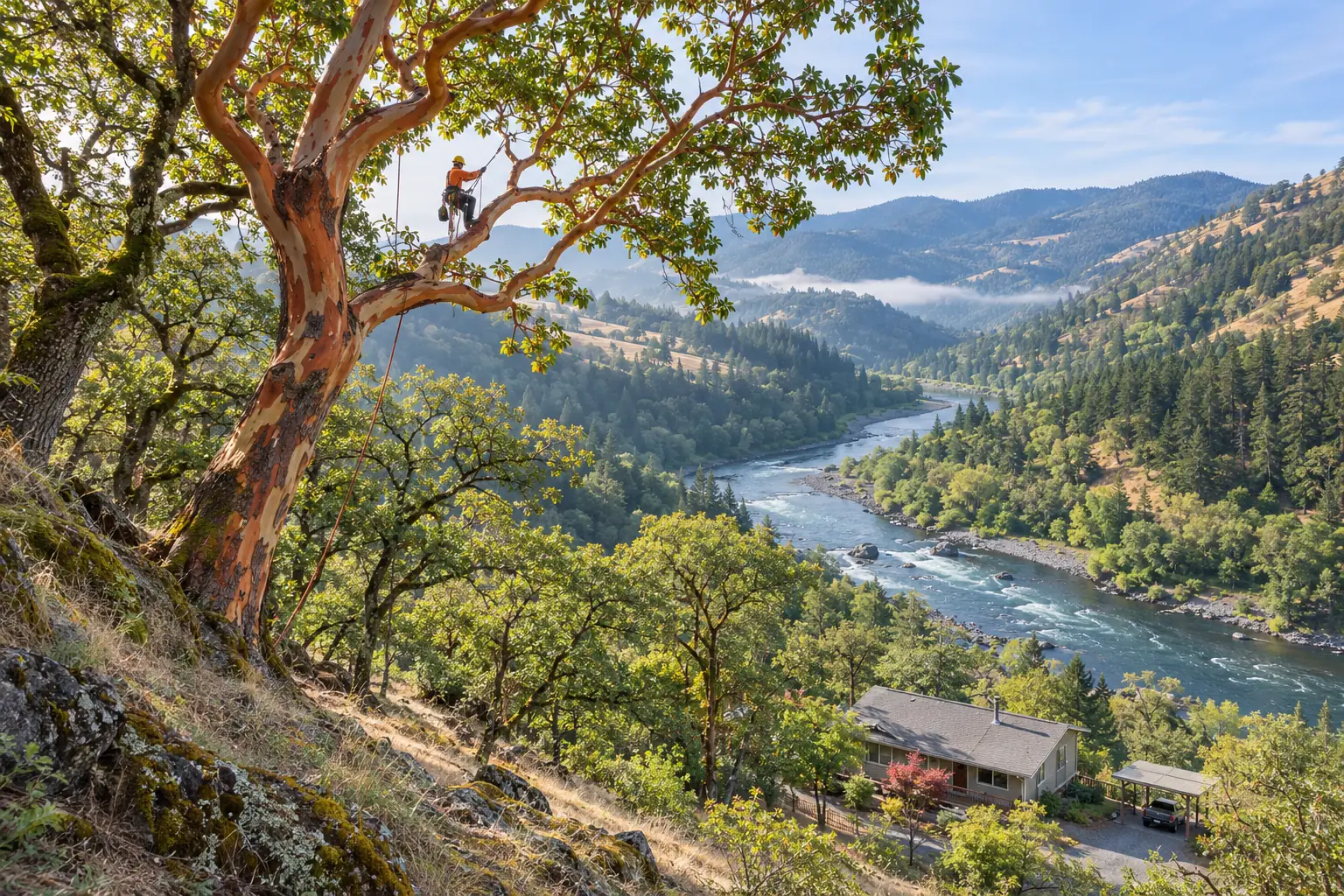
Pacific madrone. OSU Extension's madrone pest and disease fact sheet, EC 1619, written by a Jackson County Extension forester, says madrone is most abundant in Jackson, Josephine and Douglas counties, usually on warm sites with shallow, rocky soils. It is evergreen, with peeling reddish bark. Long-time residents in the south of its range sometimes call it laurel.
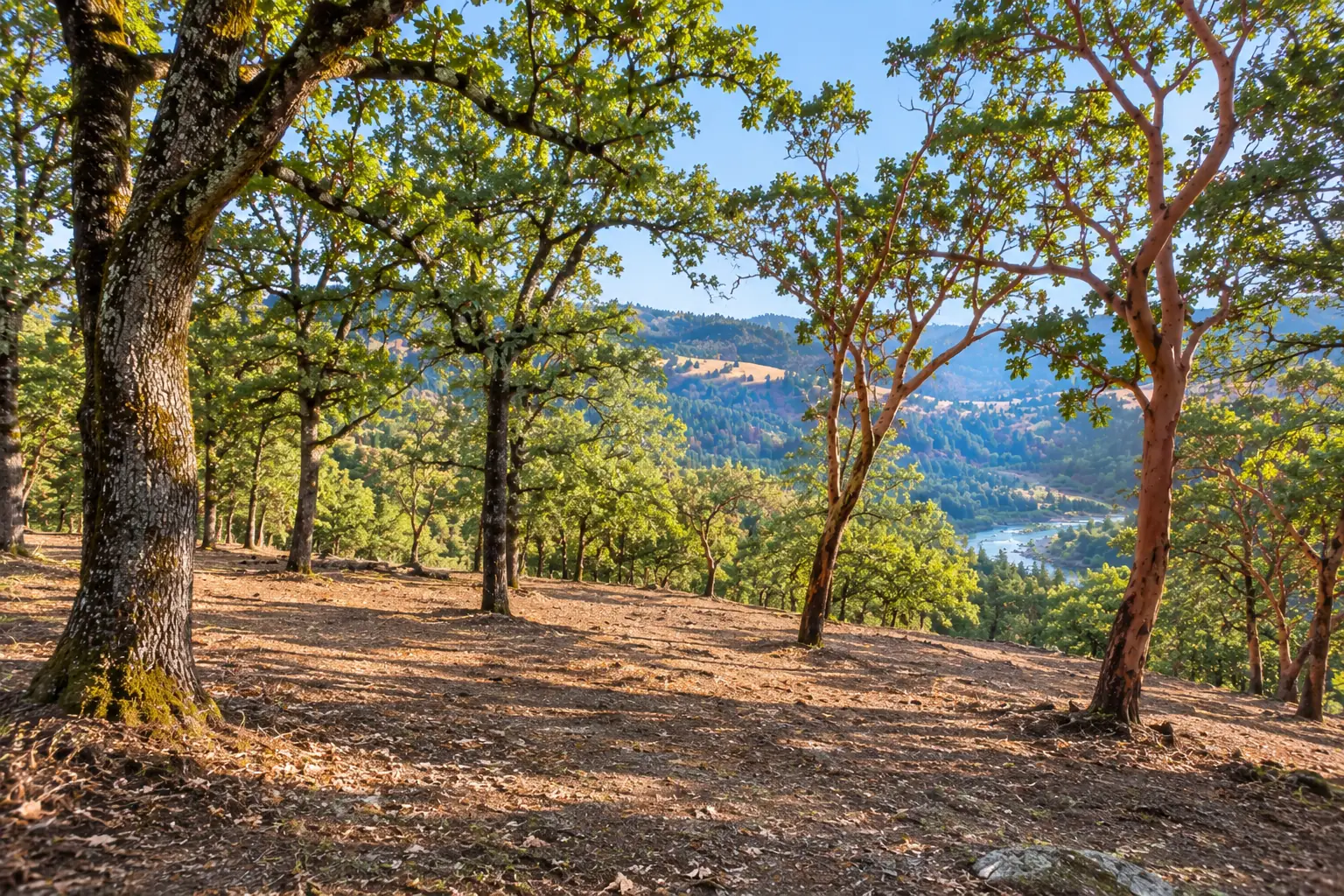
Oregon white oak. The Oregon Department of Forestry's white oak profile says it is most common on sites too exposed or too dry for other trees, grows slowly, and has a deep taproot and well-developed side roots that make it very wind firm.
California black oak. The USDA Forest Service Fire Effects Information System entry places it in the foothills and lower mountains of southern Oregon. Individual trees may live 500 years or more, though 100 to 200 years is more typical.
| Tree | Grows best with | Harmed most by |
|---|---|---|
| Pacific madrone | Full sun, rocky well-drained soil, little summer water | Frequent watering, wet soil at the trunk, bark wounds, shade from taller trees |
| Oregon white oak | Open sun, dry summers | Being overtopped by Douglas-fir, summer watering at the root crown |
| California black oak | Full sun, room to spread | Conifers growing over it, trunk wounds that let decay in |
Watering native trees the right way
Established madrones and native oaks usually need no summer watering, and too much water does them more harm than too little. ODF's watering fact sheet, dated October 2024, says to avoid overwatering drought-tolerant trees such as oaks and pines by letting the soil dry between waterings.
For madrone, EC 1619 warns that watering every day or two on flat or poorly drained ground or heavy clay "is a recipe for trouble," because wet soil favors root disease. During long summer dry spells, it suggests deep waterings about every two weeks, under the drip line but well away from the trunk. The PNW Plant Disease Management Handbook adds, for madrone twig dieback, not to focus waterings near the trunk (twig dieback entry, revised March 2026).
Oaks have the same weak spot. The handbook's oak Armillaria root rot entry, revised March 2026, says surface watering in warm months softens the main roots in the crown area and favors the fungus. It advises watering deeply only when needed and avoiding surface watering that wets the crown and trunk root area, including lawns under trees. That makes a lawn sprinkler running all summer under an old oak a setup worth changing.
Protecting the root zone
The ground under a madrone or oak matters as much as the tree above it. EC 1619 calls the area inside the drip line the critical root zone and advises against piling soil over it, trenching through it or compacting it, and if possible even beyond it, since roots can reach well past the drip line.
Common causes of root damage include:
- Driving or parking trucks and trailers under a tree.
- Spreading fill dirt to level a yard or build a pad.
- Trenching for water, power or irrigation lines.
- Stacking firewood or building materials over the roots.
- Mulch piled against the trunk. EC 1619 says mulch inside the root zone helps but should not touch the trunk.
The handbook's madrone Phytophthora canker entry gives the same advice for madrones in gardens and adds that infection can enter through wounds. Before any digging or grading near a native tree, ask the company whether the work can be moved outside the drip line.
Pruning madrones and oaks
Pruning a native hillside tree is mostly a matter of removing dead, broken or diseased wood. The International Society of Arboriculture's pruning guidance says light removal of dead or weak limbs can be done any time of year, that growth and wound closure are best when pruning comes before the spring growth flush, and that heavy pruning of live wood just after spring growth should be avoided. ISA calls topping perhaps the most harmful pruning practice known.
Some points apply to madrone in particular:
- Lower branches die on their own. EC 1619 says madrone does not tolerate shade, even its own, and loses lower limbs shaded by its upper canopy. Removing that dead wood is normal care.
- Cut cankers out well below the damage. If a canker is partway up a branch, EC 1619 advises cutting about one foot below its visible edge. Do not leave cankered wood piled beside the tree.
- Avoid sudden sun. Thin madrone bark scalds easily. When neighboring trees come out, EC 1619 suggests thinning in fall or winter, removing trees gradually, or wrapping the lower trunk.
- Limit wounds. Wood-decay fungi enter madrone through wounds, including pruning cuts, so fewer, cleaner cuts are better.
For oaks, light crown cleaning and raising low limbs over a roof, driveway or path are the usual jobs. The pruning and trimming page explains each type of cut.
Things that look bad but are normal
Several things madrones and oaks do every year worry owners more than they should. Before you pay for treatment, check whether what you see is one of these.
- Peeling bark and summer leaf drop on madrone. An OSU Extension article notes that madrones shed bark and leaves over several months in summer.
- Black, blotchy madrone leaves in winter. EC 1619 says foliage blight looks bad but will not kill the tree. Raking and destroying fallen leaves before fall rains may help.
- Webs in madrone branches in late summer. EC 1619 says the fall webworm is common on madrone in southwest Oregon and is easily controlled by pruning.
- Mistletoe clumps in an oak. OSU Extension's mistletoe publication, EM 9679, says the effects of true mistletoes on their hosts are typically negligible, though heavy infections can cause growth loss, dieback and drought stress. Pruning gives a few years of relief and has to be repeated.
Signs that need a closer look
Some symptoms point to disease or decay that can weaken a tree over a house, drive or play area. These are the ones worth a visit from a tree service.
| What you see | What it can mean | Source |
|---|---|---|
| Dieback starting at madrone branch tips and moving down | Twig dieback, linked to drought stress | EC 1619 |
| Sunken, spiraling dead bark on a madrone trunk | Madrone canker | EC 1619 |
| Brown bark near the madrone trunk base, small curled leaves | Phytophthora root disease | EC 1619 |
| Honey-colored mushrooms at an oak's base in fall or winter | Armillaria root rot | PNW handbook |
| White felt-like fungus between bark and wood at the base | Armillaria root rot | PNW handbook |
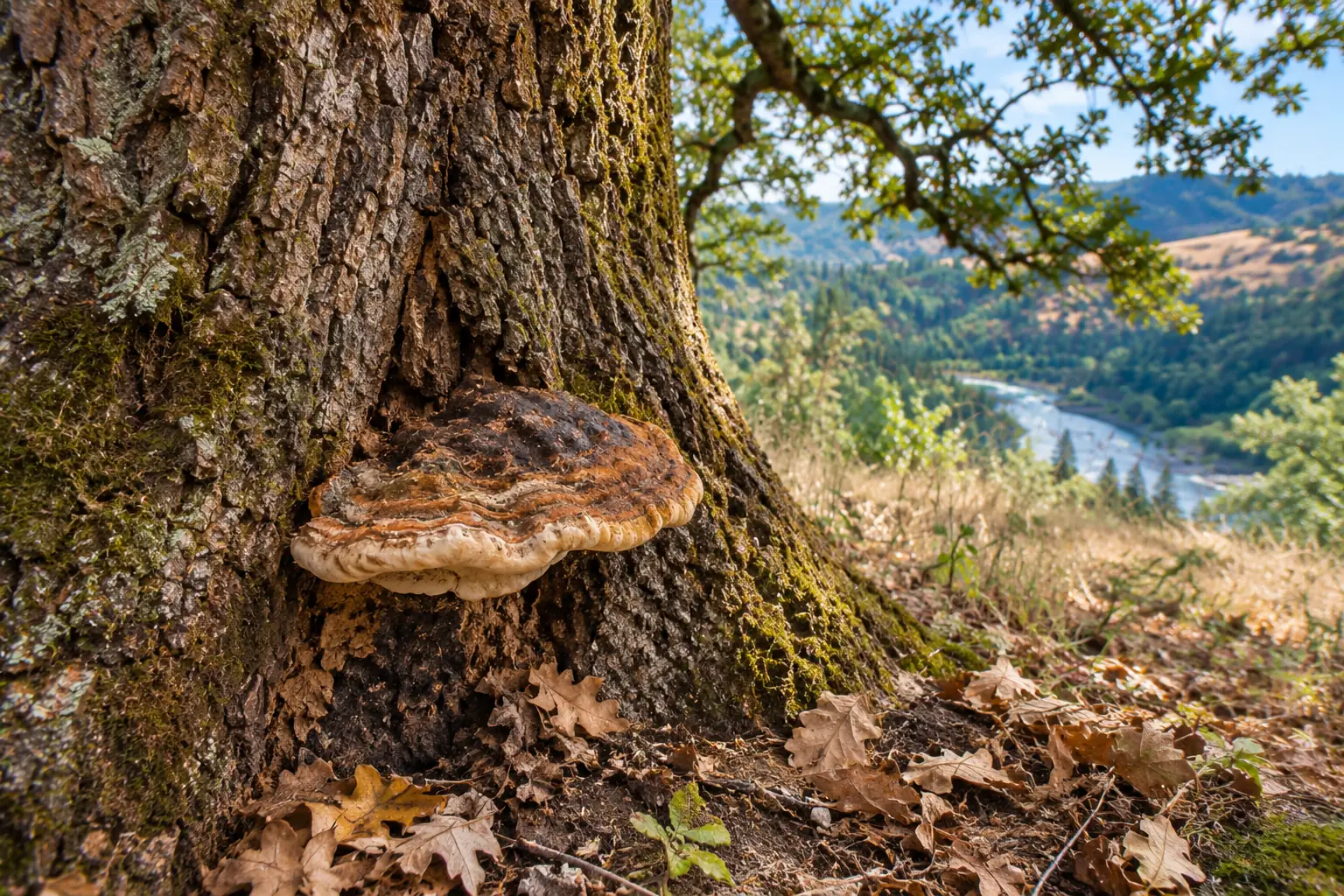
| Shelf-like conks or open heart rot | Wood decay | EC 1619 |
Decay does not always mean removal. EC 1619 notes that madrone can stand with extensive heart rot for long periods and that, unless the tree is a potential hazard, it usually is not important to remove it, since decayed trees shelter cavity-nesting birds and animals. A tree that leans toward a home is a different matter. The tree health check page explains what an inspection covers, and the dead tree removal page covers trees that have to go.
Conifers crowding your oaks and madrones
Faster-growing conifers slowly shade out native oaks and madrones on many unmanaged lots. ODF says Oregon white oak will die after being overtopped by Douglas-fir. EC 1619 says madrone declines when more shade-tolerant trees crowd its sides or grow over it. The Forest Service says conifers usually overtop California black oak in the absence of disturbance.
OSU Extension's oak and fire guide, EM 9436, published August 2024 for northwest Oregon oak lands, recommends removing trees that grow faster than oak, such as Douglas-fir, grand fir and ponderosa pine, so the oaks get sun on all sides. Taking out young conifers early costs far less than removing big ones later. The lot clearing page covers selective thinning that keeps the oaks and madrones standing.
Native trees and wildfire
The three natives respond to fire differently, which matters when you decide what to keep near the house. EM 9436 says Oregon white oak resists fire with corky bark, deep taproots and heat-tolerant buds, and that open stands with little shrub cover are less prone to crown fire. The Forest Service says large California black oaks develop bark thick enough to resist low to moderate surface fire. Its madrone entry says madrone has low fire resistance because of its thin bark, though it sprouts again from its burl after cutting, fire or disease.
OSU Extension's home ignition zone guide, EM 9247, advises keeping canopies at least 10 feet from the home. Pruning, limbing and clearing brush under native trees is regular work best booked before fire season. The fire season tree work guide covers the summer saw rules, and the hillside tree work guide covers trees on steep ground.
Frequently asked questions
Should I water my madrone in summer?
An established madrone usually needs little or no summer water. OSU's EC 1619 says frequent watering invites root disease, and suggests deep waterings about every two weeks, well away from the trunk, only during extended dry spells.
Is it normal for a madrone to drop leaves and bark in summer?
That shedding is normal. OSU Extension says madrones drop bark and leaves over several months in summer. Dieback that starts at branch tips and moves down the tree is a different problem worth checking.
Will mistletoe kill my oak tree?
OSU Extension's EM 9679 says the effects of true mistletoes are typically negligible, though heavy infections can cause growth loss, dieback and drought stress. Pruning infected branches gives a few years of relief.
When is the best season to prune oaks and madrones?
ISA says dead and weak limbs can come off any time, and that wound closure is best when pruning is done before the spring growth flush. Around Gold Hill, booking before fire season also avoids shortened saw hours.
Can a madrone grow back after it is cut down?
Madrone often grows back. The USDA Forest Service says Pacific madrone sprouts from its burl after cutting, fire or disease, so expect new shoots from the stump unless it is ground out.